Client: The Independent Police Complaints Council (IPCC)
Duration: 05:35
Language: English/Cantonese/Putonghua
Video Ownership: The Client
Video Production House: Visual Media Limited
Video Introduction
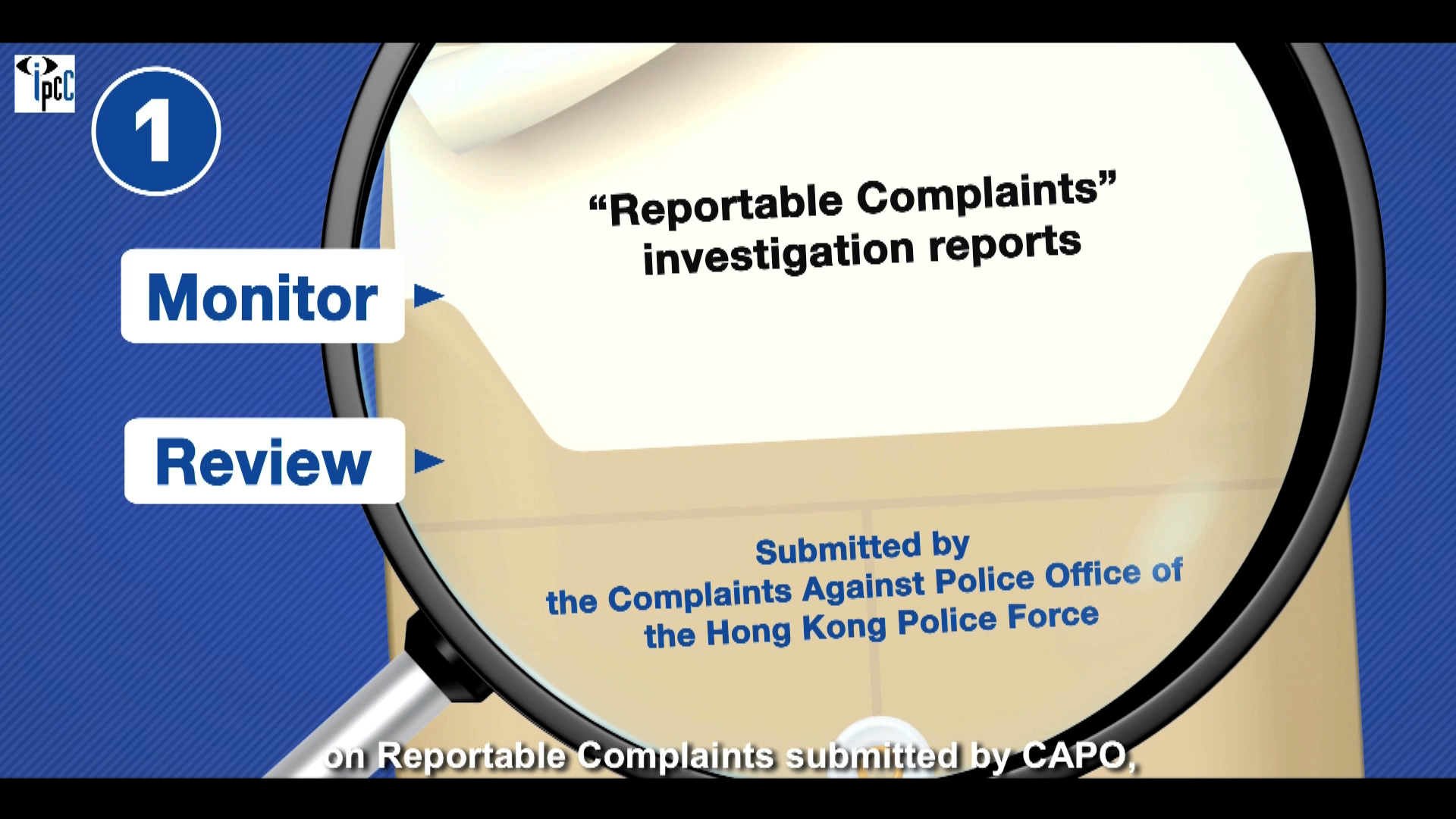
This video introduces Hong Kong’s two-tier police complaint system, which primarily consists of the Complaints Against Police Office (CAPO) and the Independent Police Complaints Council (IPCC). It begins by emphasizing the importance of maintaining public order and safety, which relies on the effective operation of the police force. As societal expectations of police services increase, properly voicing concerns or complaints about police actions becomes increasingly important. Through explaining the complaint system, the video informs viewers how to express their opinions or grievances through legitimate channels.
Video Objective
The main purpose of the video is to enhance public understanding of the police complaint system in Hong Kong and to guide citizens on how to constructively express their feedback regarding police services. By showcasing the potential complaint process and outcomes, the video aims to build public confidence in the complaint system, assuring citizens that their voices can be heard and valued. Ultimately, it seeks to demonstrate how the system can compel the police to act more responsibly in their duties, striving for improved service quality and public safety.
Challenges in Creating the Video
The production team faced several challenges during the video creation process, including:
Complexity of Information: The operation of the police complaint system involves multiple layers and technical terminology. It was crucial to explain these concepts in a way that is accessible to the general public without overwhelming them with jargon.
Eliciting Resonance: Finding ways to present specific cases or scenarios that enable viewers to relate to the material, thereby understanding the importance of the complaint system and fostering a willingness to use it.
Balancing Information and Emotion: Conveying information while being sensitive to the emotional responses from the public regarding police service, especially amidst ongoing social discussions about the role of law enforcement.
Solutions
To overcome these challenges, the production team implemented several strategies:
Simplifying Language: Using plain language to explain the different components of the police complaint system, avoiding overly technical terms that might confuse viewers.
Segmented Presentation: Structuring the video into clear sections, each focusing on the functions and processes of CAPO and IPCC, allowing viewers to gradually understand the system.
Visual Aids: Utilizing diagrams, animations, or demonstrations to help viewers visually grasp the complaint process and its outcomes, enhancing the clarity and comprehensibility of the information presented.
Case Studies: Incorporating fictional or real-life scenarios to illustrate how complaints are handled, thereby increasing trust and engagement among viewers.
Contributions
This video makes significant contributions in several areas:
Enhancing Transparency: By explaining the two-tier police complaint system, it increases public transparency about police operations and addresses societal doubts and distrust towards law enforcement.
Encouraging Public Participation: The video guides viewers to recognize that making complaints is a civic right, encouraging citizens to actively use legal channels to voice concerns when issues arise, thus boosting overall societal participation.
Strengthening Service Quality: Through the IPCC’s independent monitoring, the video underscores the necessity for improved police services, promoting citizens’ demands for higher standards of police service quality, ultimately contributing to public safety and order.
Overall, the video serves not only as an informative resource about the police complaint system but also as a powerful tool for fostering mutual trust, transparency, and accountability in society, providing significant support for governance and the community’s daily life in Hong Kong.